Understanding your tackle, one piece at a time
Before chasing bigger catches, it helps to understand what each part of your setup actually does. This guide walks through the tackle chain from rod to hook in plain terms.

Thinking of tackle as a chain
It is tempting to treat tackle as a shopping list, picking whatever looks strongest or most impressive. A more useful way to see it is as a chain. The rod, reel, line, hook and lure or bait all work together, and the whole setup is only as dependable as its weakest link.
When a fish escapes, the cause is rarely one dramatic mistake. More often, one part of the chain did not suit the others: a heavy rod paired with light line, or a large hook offered to a small, cautious fish. Learning to look at the chain as a whole is the first real step towards fishing with intention rather than hope.
The sections below take each link in turn. The aim is not to give you a fixed recipe but to help you understand why a setup behaves the way it does.
Rods and reels: the foundation
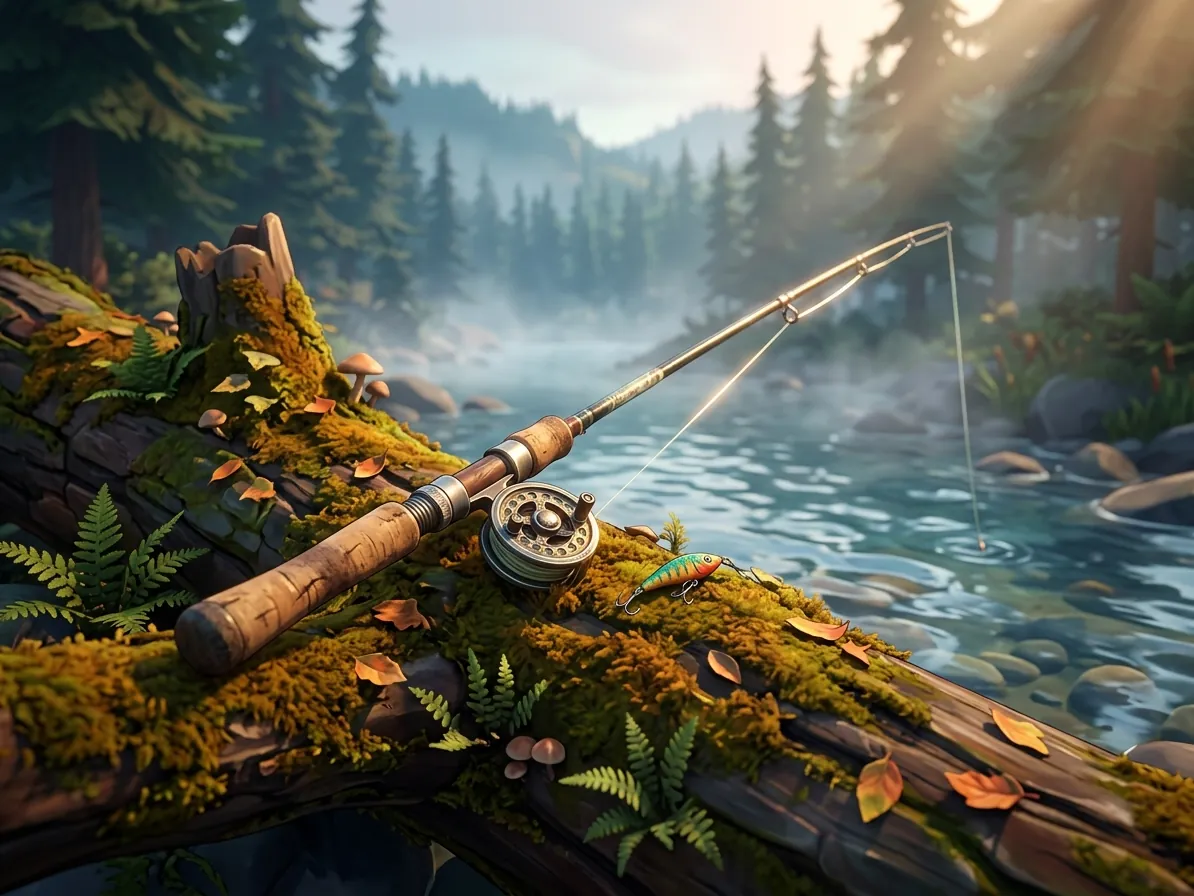
The rod is where your control begins. In realistic fishing games, rods generally differ in length, power and action, and those differences shape how far you can cast, how much pressure you can apply and how a fish feels on the line. A stiffer, heavier rod suits larger fish and heavier lures, while a lighter rod offers finesse with small baits and wary species.
The reel manages the line and, importantly, the drag. Drag is the resistance the reel offers when a fish pulls line out. Set it too tight and the line may snap under a sudden run; set it too loose and the fish can swim freely without tiring. Paying close attention to how the game communicates drag and line tension is one of the most valuable habits a new player can build.
When choosing a rod and reel, ask yourself what you expect to catch and where. That simple question narrows the options more than any list of numbers.
Line: the quiet link
Line is easy to overlook because it is thin and unremarkable, yet it is the part that actually connects you to the fish. Lines are usually described by their strength and type. Stronger line tolerates more pressure but can be less subtle, while lighter line may suit cautious fish but demands careful handling during the fight.
A practical habit is to check that your line strength makes sense alongside your rod and drag setting. If your rod is built for heavy work but your line is delicate, the line becomes the weak link. The reverse can also cause trouble, with strain simply moving to another part of the setup.
In your journal, note which line you used whenever a fish breaks off. Over several sessions, patterns tend to emerge that are far more instructive than any single loss.
Hooks, lures and bait
At the end of the chain sits the part the fish actually meets. Hook size should broadly suit the mouth of the fish you are targeting. A hook that is too large may be ignored or fail to set, while one that is too small can struggle to hold a strong fish.
Lures and natural baits each have their place. Lures imitate prey through movement, colour and depth, which means your retrieve matters as much as the lure itself. Bait relies more on a natural presentation and often rewards stillness. Rather than switching constantly, give one option a fair chance in a given spot before drawing conclusions.
If the game offers information about which species prefer certain baits, treat it as a starting point, then test it against what you observe on the water.
Building a balanced first setup
A sensible first setup is a balanced, middle-of-the-range one: a versatile rod, a reel with adjustable drag, line of moderate strength and a few hook sizes and lure types to experiment with. This combination will not be ideal for every situation, but it lets you learn how each element behaves without one part constantly overpowering another.
From there, change one thing at a time. If you swap rod, line and lure all at once and suddenly start catching fish, you will not know which change made the difference. Adjusting a single link and recording the result is slower, but it builds genuine understanding that carries over to new waters and new species.
Understanding tackle is not about owning everything. It is about knowing why you chose what is on the end of your line.
Related articles
 Before the first cast: preparing a thoughtful session
How to prepare for a session in Canadian Fishing 4: setting a goal, choosing a spot, packing suitable tackle and starting with a calm plan.
Read more
 Watching the lake before you cast
Learn to observe light, weather, wind and water in Canadian Fishing 4 and use those observations to make calmer, more informed decisions.
Read more
 Steady hands: managing the fight
Calm advice on hooking, playing and landing fish in Canadian Fishing 4, with notes on drag, line tension and patience during the fight.
Read more