Before the first cast: preparing a thoughtful session
Good sessions often begin before you reach the water. This guide shares a calm routine for planning an outing in Canadian Fishing 4.
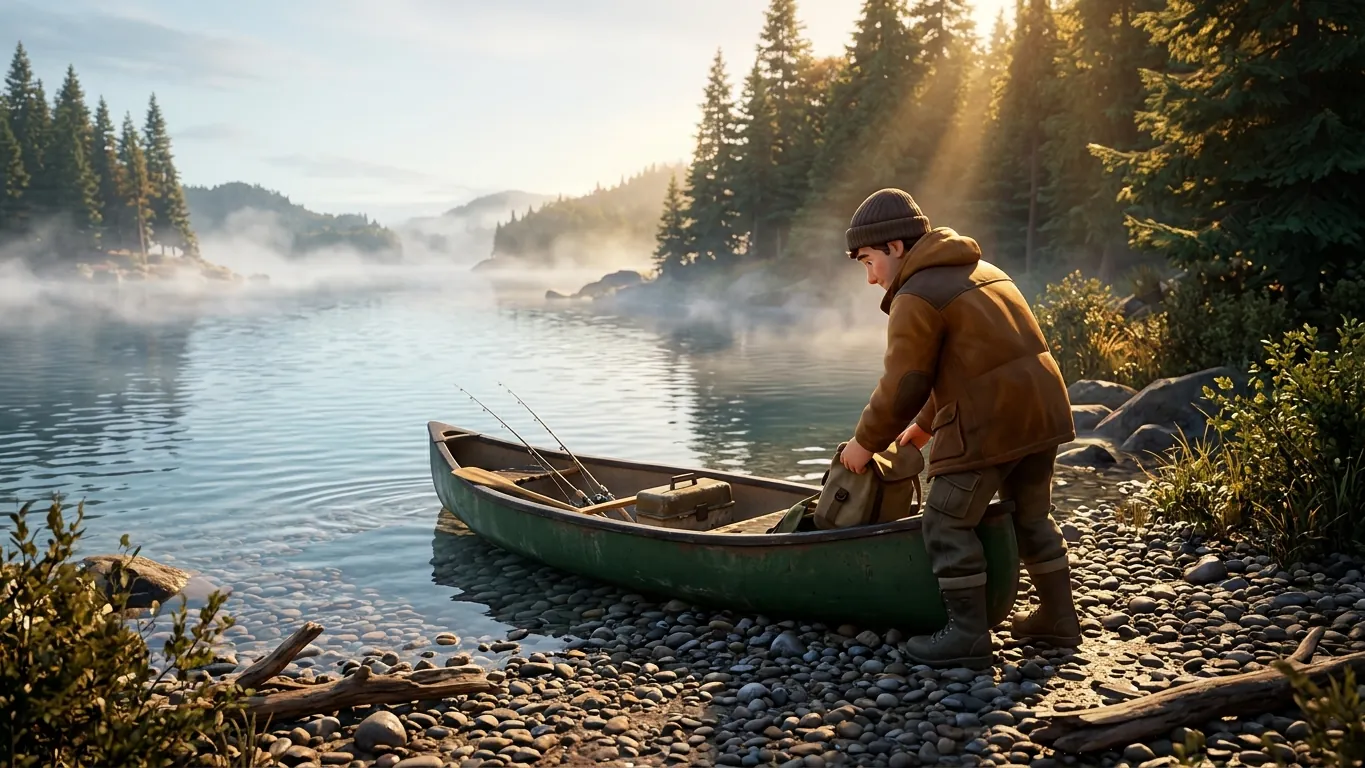
Why preparation changes the session
Many players open the game, pick the nearest spot and start casting. There is nothing wrong with that, and sometimes it is exactly the relaxed evening you want. But if you are hoping to learn, a few minutes of preparation can turn an aimless outing into a session that teaches you something specific.
Preparation is not about rigid planning. It is about arriving at the water with a question in mind. Will this lure work in shallow weedy areas? Does a lighter line change how often fish bite here? When you know what you are looking for, you notice far more of what actually happens, and your notes afterwards become much more useful.
A simple pre-session routine
This routine takes only a few minutes and can be adapted to any outing.
- 01
Set a single goal
Decide what this session is for: exploring a new spot, testing a lure, or focusing on one species. A clear goal keeps you from drifting between ideas.
- 02
Review your last notes
Look back at what happened last time, including which setups lost fish and which conditions seemed more active.
- 03
Choose a location
Pick a body of water that suits your goal and think about which areas within it you want to explore first.
- 04
Prepare two setups
Rig a main setup and a backup with different characteristics so you can adapt without a long pause.
- 05
Open a fresh log entry
Write down the location, in-game time of day and visible weather before casting, so your later observations have context.
Choosing where to fish
Location shapes almost everything else. Before you settle on a spot, think about what you want to practise. Open, deeper water tends to suit longer casts and patient presentations, while shorelines, inlets and areas around visible cover invite more precise casting and frequent repositioning.
It can help to divide a location into a few zones in your mind and spend a set amount of time in each. This turns wandering into gentle exploration. If one zone stays quiet for a long while, move on and note it, rather than assuming the whole area is empty.
Returning to the same location over several sessions is also worthwhile. Familiarity lets you notice subtle differences that are invisible on a first visit.
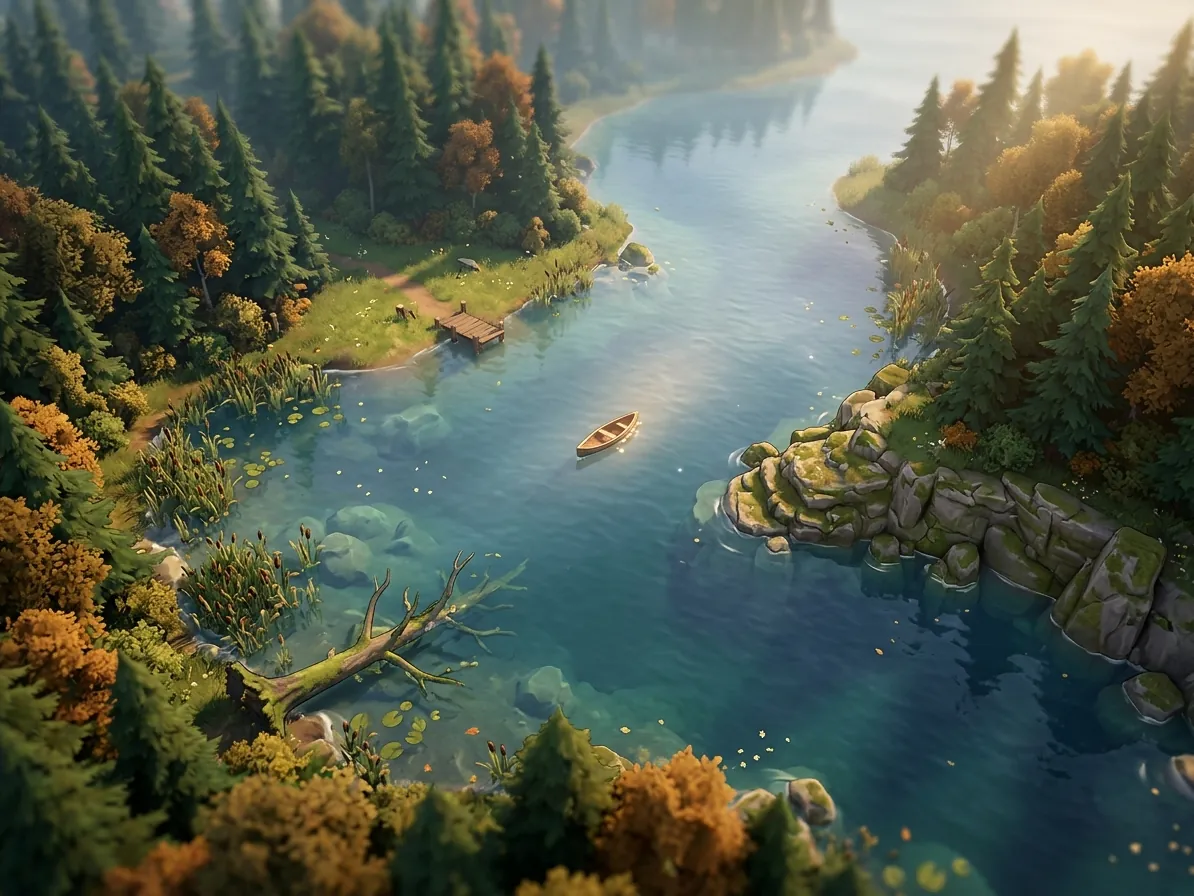
Packing light but sensibly
It is easy to bring everything you own, then spend the session swapping gear without learning much. A lighter, considered selection often works better. Choose a small range of lures or baits that suit your goal, a couple of hook sizes and line strengths that match your rods.
If your goal is to test one particular lure, bring that lure plus one contrasting option for comparison. If you are exploring a new location, bring a versatile setup and a few general-purpose baits. The point is to leave room for clear comparisons rather than endless variety.
A tidy tackle selection also keeps the session calm. Fewer choices mean fewer distractions from the water itself.
Ending the session well
Preparation does not only happen at the start. The last few minutes of a session are the best time to prepare for the next one. Before you close the game, take a moment to jot down what you tried, what happened and what you would like to test next.
Even a session with no catches is worth recording. Knowing that a certain spot stayed quiet at a certain time with a certain setup is useful information, and it saves you from repeating the same experiment without realising it.
Over time, these short closing notes create a natural rhythm: each session hands a question to the next, and your understanding of the game grows steadily.
Related articles
 Watching the lake before you cast
Learn to observe light, weather, wind and water in Canadian Fishing 4 and use those observations to make calmer, more informed decisions.
Read more
 Steady hands: managing the fight
Calm advice on hooking, playing and landing fish in Canadian Fishing 4, with notes on drag, line tension and patience during the fight.
Read more
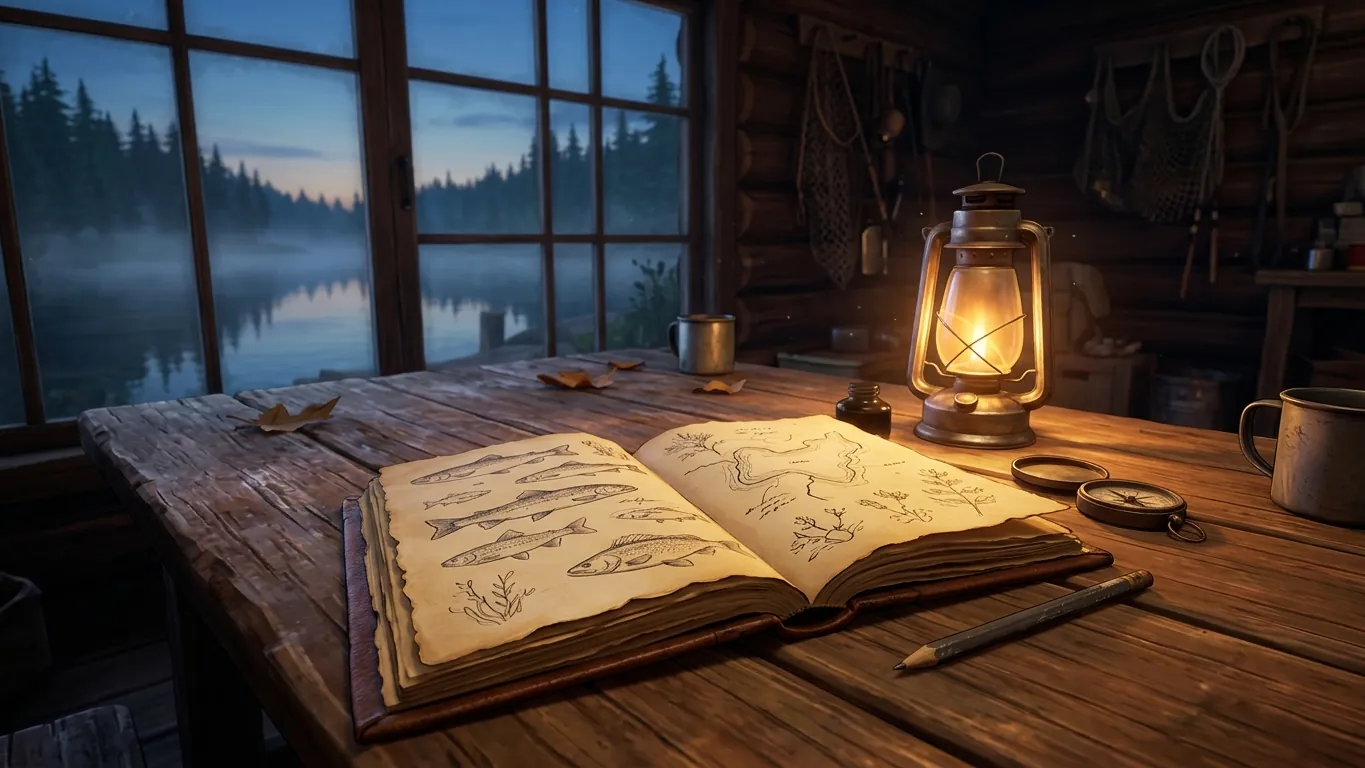 The angler's notebook: recording what the water teaches
Why and how to keep a fishing journal for Canadian Fishing 4: what to record, how to review it and how notes turn sessions into steady learning.
Read more